
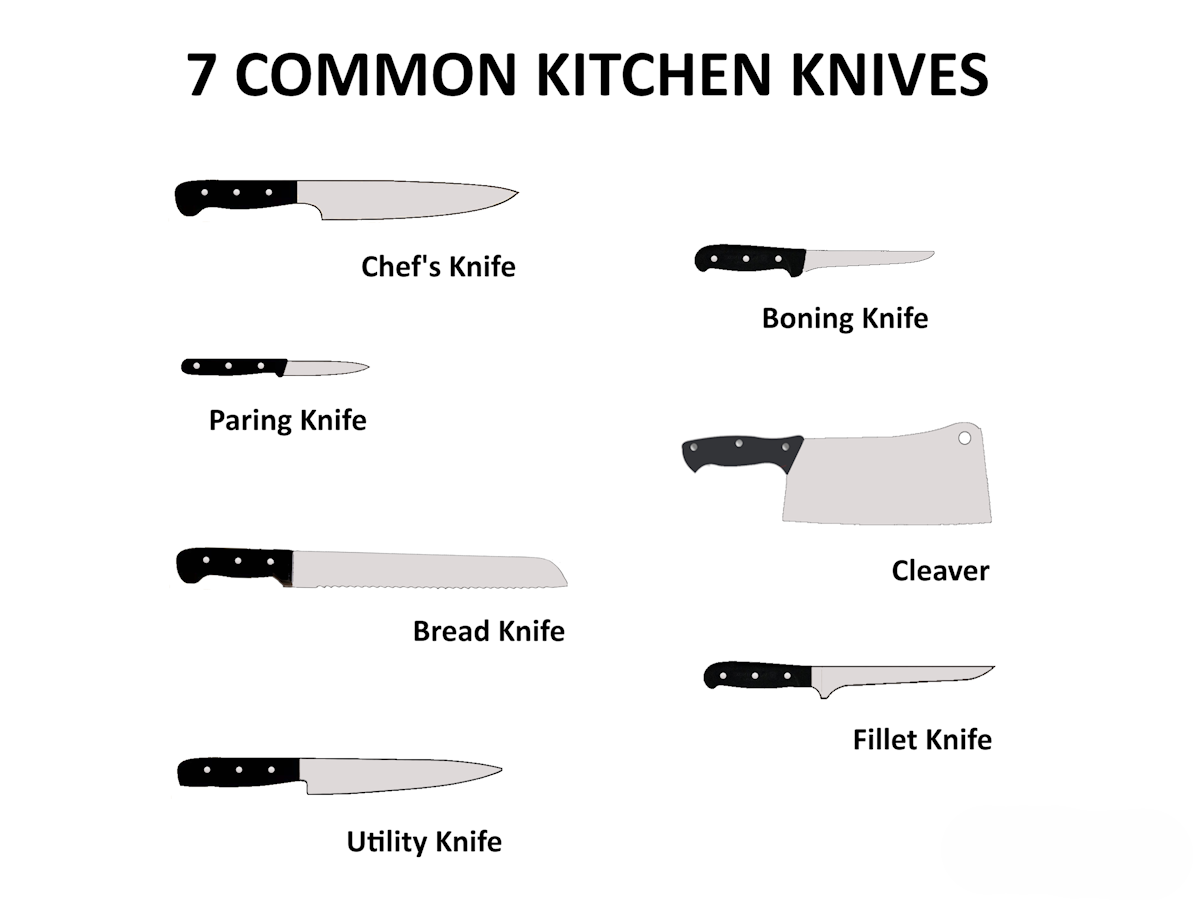
Understanding the roles of different kitchen knives can greatly enhance your culinary experience. This guide highlights seven essential knives and how they're designed for specific tasks, making food preparation more efficient and enjoyable.
1. Chef's Knife
The chef's knife is the workhorse of the kitchen. It's versatile and can be used for chopping, slicing, dicing, and mincing. The blade is typically 8-10 inches long and has a curved edge that allows for a rocking motion.
2. Paring Knife
A paring knife is a small knife with a short blade, usually around 3-4 inches long. It's perfect for intricate tasks like peeling, trimming, and slicing small fruits and vegetables.
3. Bread Knife
The bread knife has a long, serrated blade that makes it ideal for slicing through crusty bread without crushing it. It's also great for slicing tomatoes and other soft fruits.
4. Utility Knife
A utility knife is a mid-sized knife that falls between a chef's knife and a paring knife. It's great for slicing sandwiches, cutting small fruits and vegetables, and other tasks that require precision.
5. Boning Knife
A boning knife has a thin, flexible blade that is perfect for removing bones from meat and fish. The blade is usually around 5-7 inches long and can easily maneuver around bones and joints.
6. Cleaver
The cleaver is a large, heavy knife with a rectangular blade. It's used for chopping through bones and tough cuts of meat. It's also great for crushing garlic and other ingredients.
7. Fillet Knife
A fillet knife has a long, thin, flexible blade that is perfect for filleting fish. The blade is usually around 6-11 inches long and can easily glide through the flesh of the fish.
Comments