

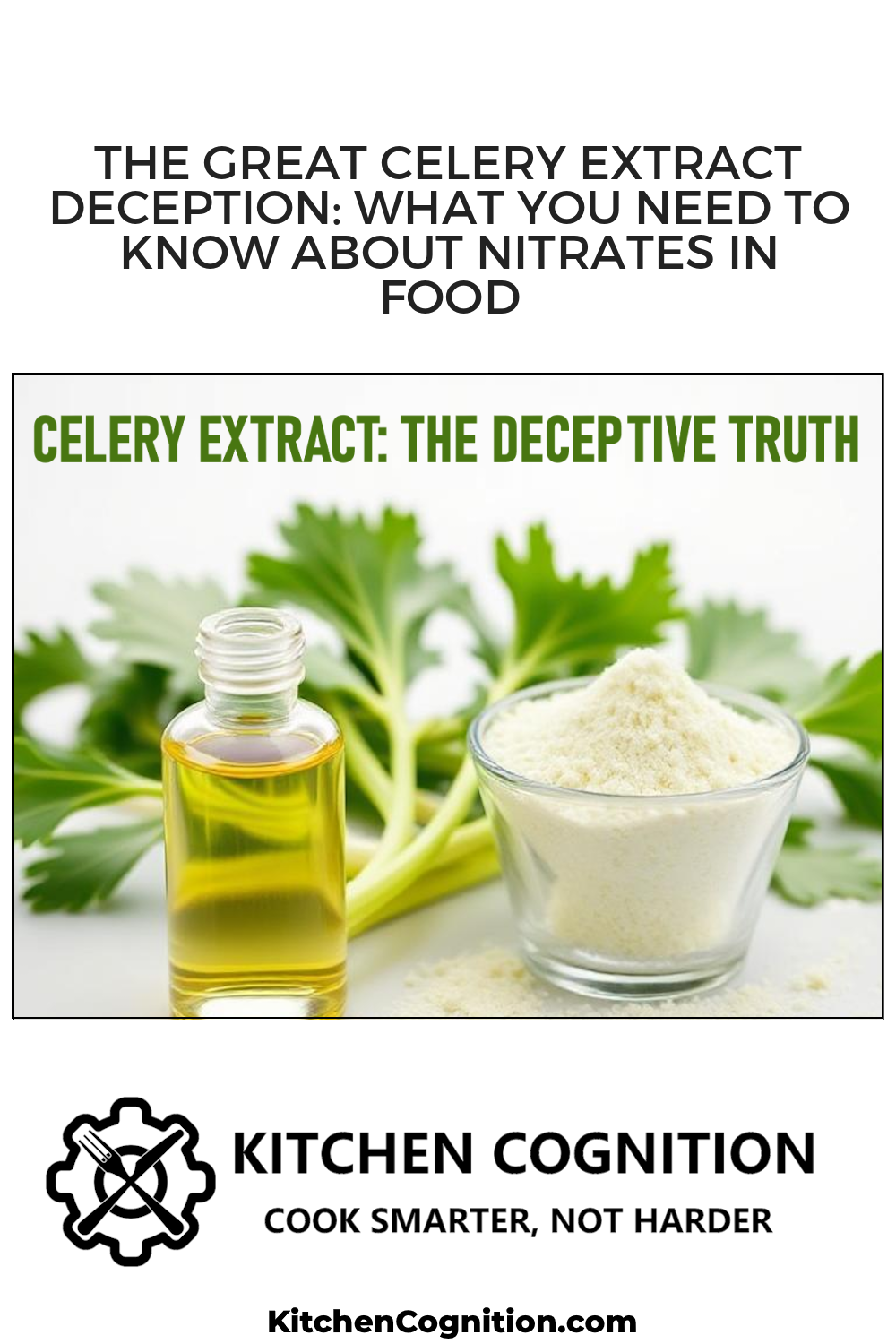
Have you ever seen the phrase "celery extract" listed as an ingredient in your favorite store bought foods. Sounds healthy, right?
The Celery Extract Trick
In the ever-evolving world of food labeling and health consciousness, manufacturers have become adept at marketing their products to appeal to consumers seeking "natural" ingredients. One such tactic is the use of celery extract. This seemingly innocuous ingredient is often added to foods to mask the presence of nitrates. The intention? To convince consumers that the food is free of synthetic additives, when in fact, it contains nitrates in a natural form.
What Are Nitrates?
Nitrates are naturally occurring compounds found in soil, water, and various foods. Chemically, they are salts or esters of nitric acid and have the formula NO3. Nitrates are essential for plant growth, playing a critical role in the nitrogen cycle. They are absorbed by plants from the soil and then utilized to form amino acids, proteins, and other vital molecules.
Sources of Nitrates:
Natural Foods: Leafy greens (spinach, lettuce), root vegetables (beets, radishes), and fruits.
Processed Foods: Preserved meats (bacon, sausages, deli meats).
Purpose of Nitrates in Natural and Processed Foods
Natural Foods: In natural, whole foods, nitrates are generally considered harmless and even beneficial. When consumed in moderation, nitrates found in vegetables can have health benefits, such as improving blood flow and reducing blood pressure. The presence of antioxidants and vitamins in these foods helps to mitigate any potential negative effects of nitrates.
Processed Foods: Nitrates in processed foods serve a different purpose. They are primarily used as preservatives, helping to extend the shelf life and maintain the color of cured meats. When nitrates are added to these foods, they prevent the growth of harmful bacteria, such as Clostridium botulinum, which causes botulism. However, during the cooking process, nitrates can convert to nitrites, which then react with proteins to form nitrosamines. These compounds have been linked to an increased risk of certain cancers when consumed in large quantities over time.
The Controversy
The use of celery extract as a source of nitrates in processed foods has sparked debate. On one hand, it allows manufacturers to label their products as containing "natural" ingredients, which is appealing to health-conscious consumers. On the other hand, it can be seen as deceptive, as the end result is still the presence of nitrates, regardless of their source. Critics argue that this practice exploits consumer trust and undermines efforts to reduce synthetic additives in our diets.
Conclusion
While nitrates themselves are not inherently harmful and even provide health benefits when consumed through vegetables, their presence in processed foods, whether through synthetic additives or natural sources like celery extract, warrants scrutiny. Consumers should be aware of these labeling practices and make informed choices about the foods they consume.
Understanding the role and sources of nitrates can help you navigate the complex world of food labeling and make choices that align with your health and dietary preferences. So next time you pick up a pack of "nitrate-free" bacon, take a closer look at the ingredients list—you might find that celery extract lurking in the background.
Sources and More Info:
- American Institute for Cancer Research: Hot Dogs, Bacon, Celery Powder and Cancer Risk
- WebMD: Foods High in Nitrates
- NPR: Duped In The Deli Aisle? 'No Nitrates Added' Labels Are Often Misleading
Comments